

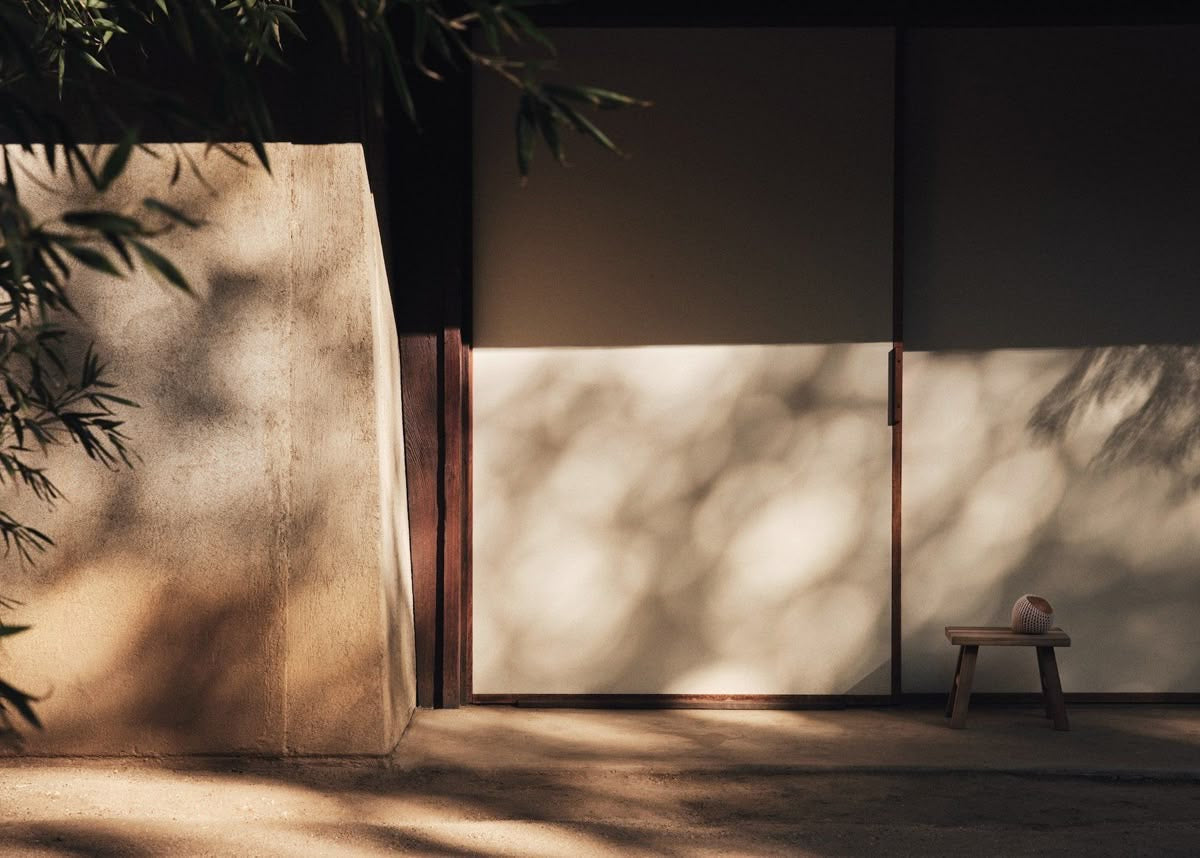
Quick Answer
Japandi merges Japanese wabi-sabi (beauty in imperfection) with Scandinavian hygge (warmth, cosiness). The result: a home that is simultaneously minimal and warm — stripped of clutter, but never cold.
In 2026, Japandi is no longer a trend. It's a design philosophy — one that's taken root across European interiors from Copenhagen to Milan.
More than a visual style, it's a way of thinking about objects in your home: fewer things, chosen with more care, each one doing its job beautifully.

1. The Philosophy Behind Japandi
From Japan comes wabi-sabi: the acceptance of imperfection and impermanence as sources of beauty. A hand-thrown ceramic bowl that's slightly uneven. A linen cushion that creases.
A wooden surface that bears the marks of use. Nothing is pretending to be new or perfect. Everything is honest.
From Scandinavia comes hygge (Danish/Norwegian) and lagom (Swedish): the pursuit of the 'just right' — enough warmth, enough light, enough comfort, nothing excessive.
Together, these two traditions produce something Western maximalism has never quite achieved: a home that is aesthetically restrained but emotionally generous.
2. The Japandi Colour Palette
The Japandi palette is built on earthy neutrals anchored by occasional muted naturals. It is not the stark, cold white of generic minimalism.
It is the warm white of unbleached linen. The greyed taupe of raw concrete. The warm tan of undyed leather.
• Warm whites: parchment, off-white, cream — never brilliant white
• Earth tones: sand, dune, warm grey, stone, umber
• Muted naturals: sage green, dusty blue, terracotta, clay — never saturated
• Deep anchors: charcoal, ebony, soot black — used sparingly for contrast
In 2026, designers are also incorporating plant-dyed vibrancy into Japandi interiors — olive greens, peach blushes, sky blues — colours that feel alive without disrupting the underlying calm.
This reflects the influence of brands like Pangaia, demonstrating that sustainability and colour confidence can coexist.
3. Materials: What Belongs in a Japandi Home
Wood
Light ash, pale oak, bamboo, and rattan are the Japandi timbers. Grain should be visible. Finish should be matte or barely-there oil.
Dark mahogany or high-gloss lacquer don't belong here.
Ceramics and Stone
Handmade ceramics — cups, bowls, lamp bases, vases — are essential. The irregularity is the point. Machine-made uniformity looks out of place.
Unpolished stone, slate, and sandstone add weight and texture.
Linen and Natural Textiles
Curtains should be undyed or warm-white linen, floor to ceiling. Cushions in oatmeal, warm grey, sage.
Throws in wool or recycled cotton. Nothing polyester, nothing with a sheen.
Metal Accents
Where metal appears, it should be brushed brass, warm copper, or matte black — never chrome.
Minimally used. One door handle. One tap. One lamp base. Not scattered.

4. Lighting: The Heart of a Japandi Interior
Lighting is the most transformative element of Japandi design. The goal is layered, warm, diffused light — never overhead, never harsh, never bright white. Aim for bulbs at 2700K. Linen and paper shades that diffuse rather than direct.
Multiple sources at different heights — a pendant, a floor lamp, a bedside lamp — so the room has depth and warmth at every level.
Portable ambient lamps are particularly well-suited to Japandi interiors. They can be moved — to the dining table for dinner, to the bedside for reading, to the garden for an evening outside.
The Abode Nora portable ambient lamp, available in Clay, Berry, Ocean Blue, and Forest Green, is designed precisely for this flexibility.
|
Abode Nora A rechargeable portable ambient lamp for Japandi and Nordic interiors. Warm 2700K light, dimmable, four nature-inspired colours. Coming soon at byabode.com. |
5. Air and Cooling: The Overlooked Japandi Object
Japandi interiors don't broadcast their functional objects. A fan in most homes looks like an appliance: plastic, industrial, designed purely for function. The new generation of design-led portable fans resolves this.
A fan in White, Olive Green, or Sky Blue — with clean proportions, no visible cables, and a warm built-in light — earns its place on a Japandi desk or bedside table in the same way a ceramic lamp or a rattan tray does.
|
Abode Flo A cordless portable fan with built-in LED mood light. In White, Sky Blue, Peach, and Olive Green — colours from the Japandi palette. Shop now at byabode.com. |
6. Common Japandi Mistakes to Avoid
• Going too cold: Japandi is warm minimalism. Add textures, soft light, and living plants.
• Buying 'Japandi' furniture from mass-market retailers: the aesthetic is recognisable but the craft is absent.
• Confusing Japandi with grey-and-white minimalism: Japandi has warmth and earth tones.
• Neglecting lighting: you can have perfect furniture and ruin it with the wrong bulbs.
• Cluttering surfaces: Japandi requires restraint. One beautiful object per surface. Maybe two.

Frequently Asked Questions
What is the difference between Japandi and Scandinavian design?
Scandinavian design prioritises function and simplicity with a focus on practicality and light.
Japandi layers in Japanese wabi-sabi — the appreciation of imperfection, natural materials, and the beauty of empty space.
Japandi tends to be warmer and more tactile than pure Scandi.
What colours work best in a Japandi interior?
Warm neutrals (parchment, linen, dune, stone) form the base. Muted naturals — sage green, dusty blue, clay, peach — add life without disruption.
Deep charcoal and soot black anchor the palette. Avoid brilliant white, grey-blue, and any saturated colours.
What objects are most important in a Japandi home?
Lighting (warm, layered, portable), ceramics (handmade, irregular), natural textiles (linen, wool), and wood (pale, matte-finished).
Every functional object — a fan, a lamp, a tray — should earn its place aesthetically, not just functionally.
Is Japandi design expensive?
It doesn't have to be. Japandi is about choosing fewer things with more care.
A beautiful second-hand ceramic and a well-designed portable fan can achieve more than a room full of cheap 'Scandi' products from a fast-furniture retailer.
Leave a comment
This site is protected by hCaptcha and the hCaptcha Privacy Policy and Terms of Service apply.